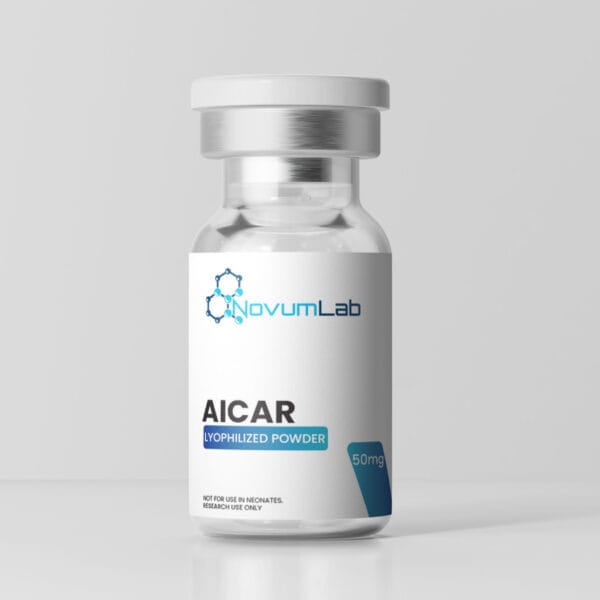
AICAR
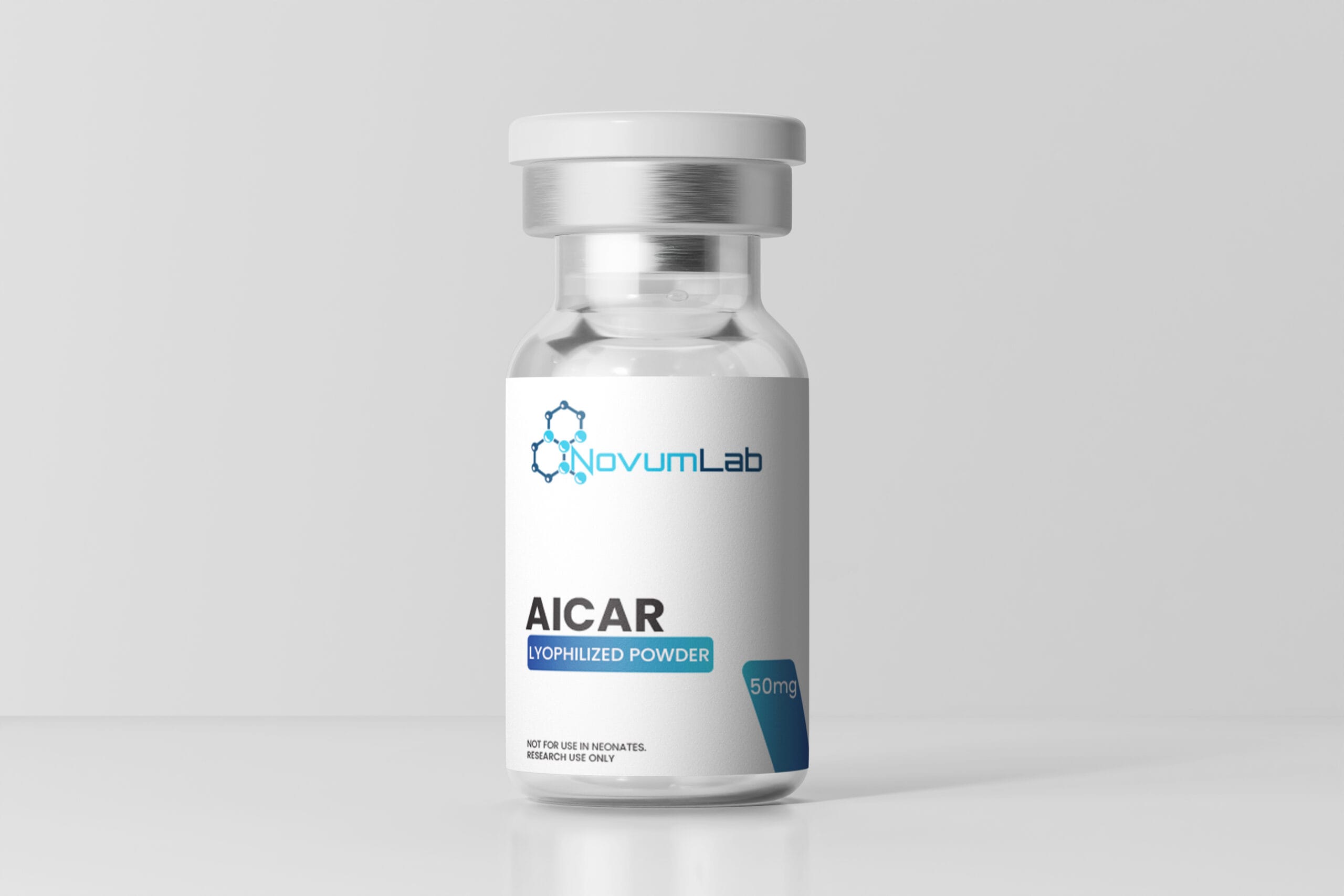
AICAR (5-Aminoimidazole-4-carboxamide ribonucleotide) is an AMP-activated protein kinase (AMPK) activator. Investigated in metabolic and exercise physiology research. Lyophilized powder. Purity ≥98% (HPLC). For in-vitro research use only.
119,90 €
* The information on this page is a summary and is not intended to cover all available information about this product. It does not cover all possible uses, directions, precautions, interactions or adverse effects and is not a substitute for the expertise and judgement of a professional.
AICAR — AMPK Activator
AICAR (5-Aminoimidazole-4-carboxamide ribonucleotide, also known as Acadesine) is a cell-permeable nucleoside analogue that activates AMP-activated protein kinase (AMPK). It has been studied in metabolic and exercise physiology research.
Research Background:
AICAR has been investigated as a pharmacological AMPK activator in numerous preclinical studies. AMPK is a central regulator of cellular energy homeostasis, making AICAR a widely used research tool in metabolic studies.
Published research has examined AICAR in glucose uptake assays, fatty acid oxidation models, and exercise physiology studies. It is one of the most commonly used AMPK activators in laboratory research.
Compound Information:
- CAS Number: 2627-69-2
- Target: AMPK (AMP-activated protein kinase)
- Classification: Nucleoside analogue — metabolic research tool
Product Specifications:
- Form: Lyophilized (freeze-dried) powder
- Purity: ≥98% (HPLC verified)
- Container: Type I Borosilicate Glass Vial
- Storage: -20°C recommended, 2-8°C for short-term
- Reconstitution: Bacteriostatic water or sterile water
- Manufacturer: NovumLab
- Quality Control: Each batch independently tested
- Intended Use: In-vitro laboratory research only
This product is not a drug, food, or cosmetic and should be handled by qualified professionals in laboratory conditions. All product information is provided for educational purposes only. The product is not a food or dietary supplement and is not suitable for human consumption. For in-vitro research use only.
Frequently asked questions
Peptides are sold as research compounds for laboratory and research purposes and do not require a prescription. You can order freely.
Lyophilized peptides should be stored at -20°C or lower for long-term storage. For optimal preservation, store at -80°C if available. Keep peptides in their original sealed vials away from light, moisture, and temperature fluctuations.
Important tips:
- Allow vials to reach room temperature in a desiccator before opening to prevent moisture absorption
- Avoid repeated freeze-thaw cycles - only remove from freezer when ready to use
- Store in airtight containers with desiccant packs to prevent moisture exposure
- Keep away from direct light - use amber vials or wrap in aluminum foil
- Properly stored lyophilized peptides can remain stable for 2-4 years
Once reconstituted with bacteriostatic water, peptides should be stored at 2-8°C (refrigerator) and used within 2-4 weeks for optimal potency. Some peptides may remain stable for up to 8 weeks when properly refrigerated.
Storage guidelines for reconstituted peptides:
- Refrigerator storage (2-8°C): 2-4 weeks recommended maximum
- Freezer storage (-20°C): Possible but not recommended due to freeze-thaw damage
- Peptides containing Met, Cys, or Trp have shorter shelf life due to oxidation
- Peptides containing Asn, Gln are more prone to degradation in solution
- Create multiple aliquots to avoid repeated freeze-thaw cycles if freezing is necessary
Note: We recommend using reconstituted peptides within 2 weeks when possible, as potency gradually decreases over time.
Always use bacteriostatic water (BAC water) containing 0.9% benzyl alcohol for reconstituting peptides intended for multiple doses. Bacteriostatic water prevents bacterial growth and maintains sterility over several weeks of use.
Water types comparison:
- Bacteriostatic Water (RECOMMENDED): Contains 0.9% benzyl alcohol preservative, multi-use safe, prevents contamination, stable for 28 days after first puncture
- Sterile Water: No preservative, single-use only, risk of contamination with multiple punctures, not recommended for peptides
- Tap Water (NEVER USE): Contains impurities, minerals, chlorine, bacteria - will destroy peptides and cause contamination
- Distilled/Boiled Water (NOT RECOMMENDED): Not sterile, lacks antimicrobial properties, risk of bacterial growth
Use this simple formula to calculate dosage:
Concentration = Total mg in vial ÷ Total ml of water added
Example calculation:
- You have: 5mg BPC-157 vial
- You add: 2ml bacteriostatic water
- Concentration: 5mg ÷ 2ml = 2.5mg/ml
- If your dose is 250mcg (0.25mg): 0.25mg ÷ 2.5mg/ml = 0.1ml (10 units on insulin syringe)
Common reconstitution volumes:
- 2mg vial + 2ml water = 1mg/ml concentration
- 5mg vial + 2ml water = 2.5mg/ml concentration
- 10mg vial + 2ml water = 5mg/ml concentration
Tip: Use our online peptide calculators or create a dosing chart when you reconstitute to avoid calculation errors.


Reviews
Clear filtersThere are no reviews yet.