
LL-37
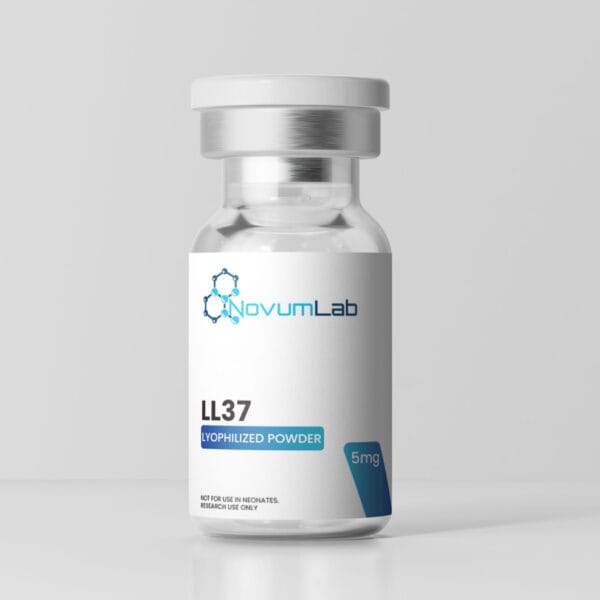
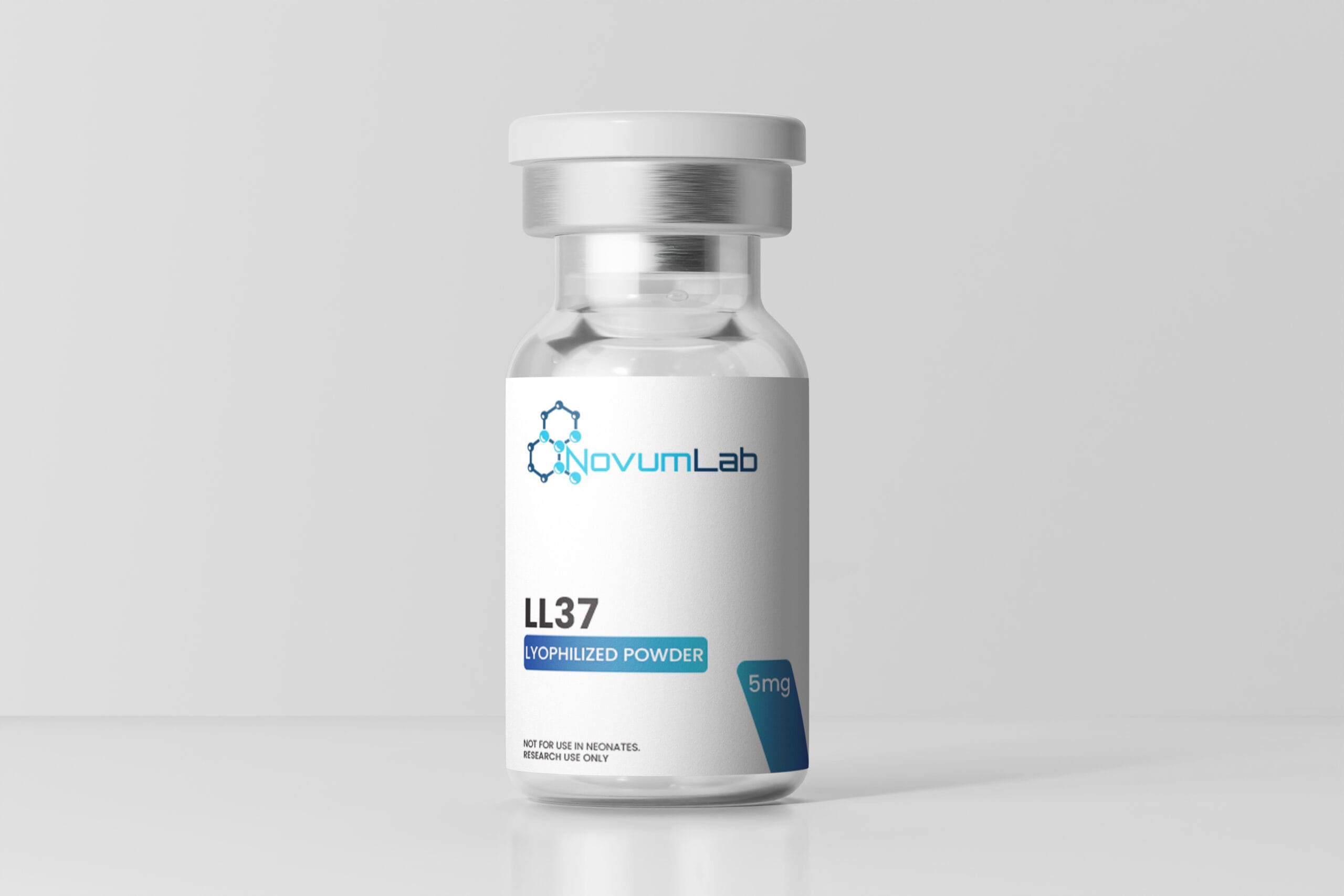
LL-37 ist ein 37-Aminosäuren-Peptid aus der Familie der Cathelicidine, einer natürlich vorkommenden Komponente des angeborenen Immunsystems. Es wird in der mikrobiologischen und immunologischen Forschung untersucht. Lyophilisiertes Pulver. Reinheit ≥98% (HPLC). Nur für die In-vitro-Forschung geeignet.
31,90 €
* The information on this page is a summary and is not intended to cover all available information about this product. It does not cover all possible uses, directions, precautions, interactions or adverse effects and is not a substitute for the expertise and judgement of a professional.
LL-37 – Antimikrobielles Cathelicidin-Peptid
LL-37 ist ein Peptid aus 37 Aminosäuren und das einzige Mitglied der Cathelicidin-Familie, das beim Menschen vorkommt. Es ist ein natürlich vorkommender Bestandteil des angeborenen Immunsystems und wird von Epithelzellen, Neutrophilen und Makrophagen exprimiert.
Forschungshintergrund:
LL-37 wurde in der mikrobiologischen und immunologischen Forschung umfassend untersucht. In Laboruntersuchungen wurden seine Wechselwirkungen mit bakteriellen Membranen, seine Rolle bei der Signalübertragung des angeborenen Immunsystems und sein Verhalten in Modellen der Wundbiologie untersucht.
Das Peptid ist aufgrund seiner in vitro beobachteten breit wirksamen antimikrobiellen Eigenschaften gegen Bakterien, Pilze und behüllte Viren von besonderem Forschungsinteresse. Veröffentlichte Studien haben zudem sein immunmodulatorisches Verhalten über die direkte antimikrobielle Aktivität hinaus untersucht.
Informationen zur Verbindung:
- Sequenz: 37 Aminosäuren
- Herkunft: Humanes Cathelicidin (Spaltprodukt von hCAP-18)
- Klassifizierung: Antimikrobielles Forschungspeptid
Produktspezifikationen:
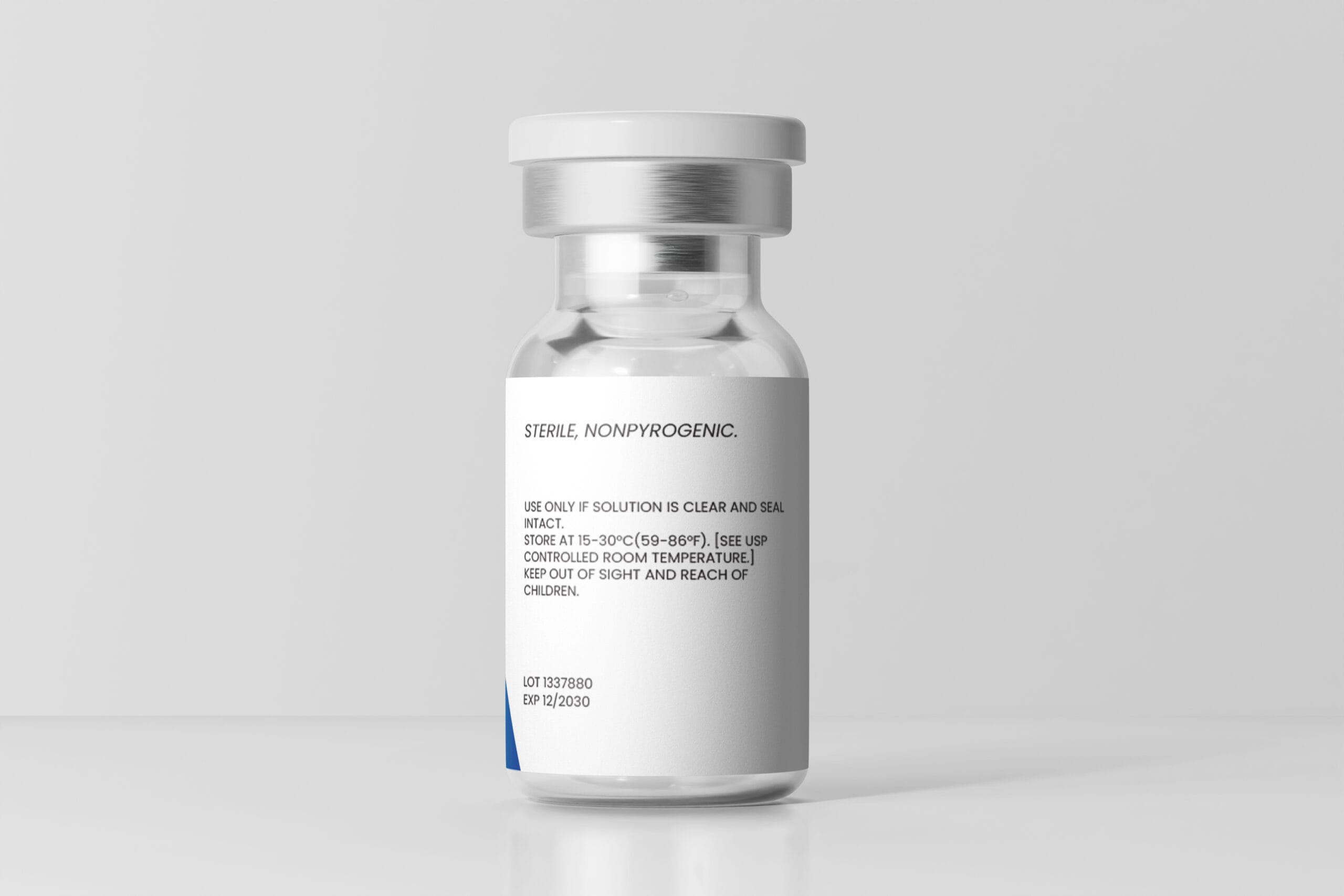
- Form: Lyophilisiertes (gefriergetrocknetes) Pulver
- Reinheit: ≥98 % (HPLC-verifiziert)
- Behälter: Borosilikatglasfläschchen Typ I
- Lagerung: -20 °C empfohlen, 2–8 °C für kurze Zeit
- Rekonstitution: Bakteriostatisches Wasser oder steriles Wasser
- Hersteller: NovumLab
- Qualitätskontrolle: Jede Charge wird unabhängig geprüft
- Verwendungszweck: Ausschließlich für die In-vitro-Laborforschung
Dieses Produkt ist kein Arzneimittel, Lebensmittel oder Kosmetikum und sollte unter Laborbedingungen von qualifiziertem Fachpersonal gehandhabt werden. Alle Produktinformationen dienen ausschließlich zu Bildungszwecken. Das Produkt ist kein Lebensmittel oder Nahrungsergänzungsmittel und nicht für den menschlichen Verzehr geeignet. Nur für die In-vitro-Forschung bestimmt.
Frequently asked questions
Peptides are sold as research compounds for laboratory and research purposes and do not require a prescription. You can order freely.
Lyophilized peptides should be stored at -20°C or lower for long-term storage. For optimal preservation, store at -80°C if available. Keep peptides in their original sealed vials away from light, moisture, and temperature fluctuations.
Important tips:
- Allow vials to reach room temperature in a desiccator before opening to prevent moisture absorption
- Avoid repeated freeze-thaw cycles - only remove from freezer when ready to use
- Store in airtight containers with desiccant packs to prevent moisture exposure
- Keep away from direct light - use amber vials or wrap in aluminum foil
- Properly stored lyophilized peptides can remain stable for 2-4 years
Once reconstituted with bacteriostatic water, peptides should be stored at 2-8°C (refrigerator) and used within 2-4 weeks for optimal potency. Some peptides may remain stable for up to 8 weeks when properly refrigerated.
Storage guidelines for reconstituted peptides:
- Refrigerator storage (2-8°C): 2-4 weeks recommended maximum
- Freezer storage (-20°C): Possible but not recommended due to freeze-thaw damage
- Peptides containing Met, Cys, or Trp have shorter shelf life due to oxidation
- Peptides containing Asn, Gln are more prone to degradation in solution
- Create multiple aliquots to avoid repeated freeze-thaw cycles if freezing is necessary
Note: We recommend using reconstituted peptides within 2 weeks when possible, as potency gradually decreases over time.
Always use bacteriostatic water (BAC water) containing 0.9% benzyl alcohol for reconstituting peptides intended for multiple doses. Bacteriostatic water prevents bacterial growth and maintains sterility over several weeks of use.
Water types comparison:
- Bacteriostatic Water (RECOMMENDED): Contains 0.9% benzyl alcohol preservative, multi-use safe, prevents contamination, stable for 28 days after first puncture
- Sterile Water: No preservative, single-use only, risk of contamination with multiple punctures, not recommended for peptides
- Tap Water (NEVER USE): Contains impurities, minerals, chlorine, bacteria - will destroy peptides and cause contamination
- Distilled/Boiled Water (NOT RECOMMENDED): Not sterile, lacks antimicrobial properties, risk of bacterial growth
Use this simple formula to calculate dosage:
Concentration = Total mg in vial ÷ Total ml of water added
Example calculation:
- You have: 5mg BPC-157 vial
- You add: 2ml bacteriostatic water
- Concentration: 5mg ÷ 2ml = 2.5mg/ml
- If your dose is 250mcg (0.25mg): 0.25mg ÷ 2.5mg/ml = 0.1ml (10 units on insulin syringe)
Common reconstitution volumes:
- 2mg vial + 2ml water = 1mg/ml concentration
- 5mg vial + 2ml water = 2.5mg/ml concentration
- 10mg vial + 2ml water = 5mg/ml concentration
Tip: Use our online peptide calculators or create a dosing chart when you reconstitute to avoid calculation errors.


Rezensionen
Filter löschenEs gibt noch keine Rezensionen.